AYCE
Turning the chaos of kitchen operations into a system so simple, it runs itself.
AYCE's kitchen software ran on tangled data: menu items, ingredients, prep and stock all moving at once. I owned the design end to end and started by mapping how kitchens actually work, which shifted the goal from adding features to removing decisions staff had to make under pressure. The system is now being piloted with real kitchen teams.
Visit live site ↗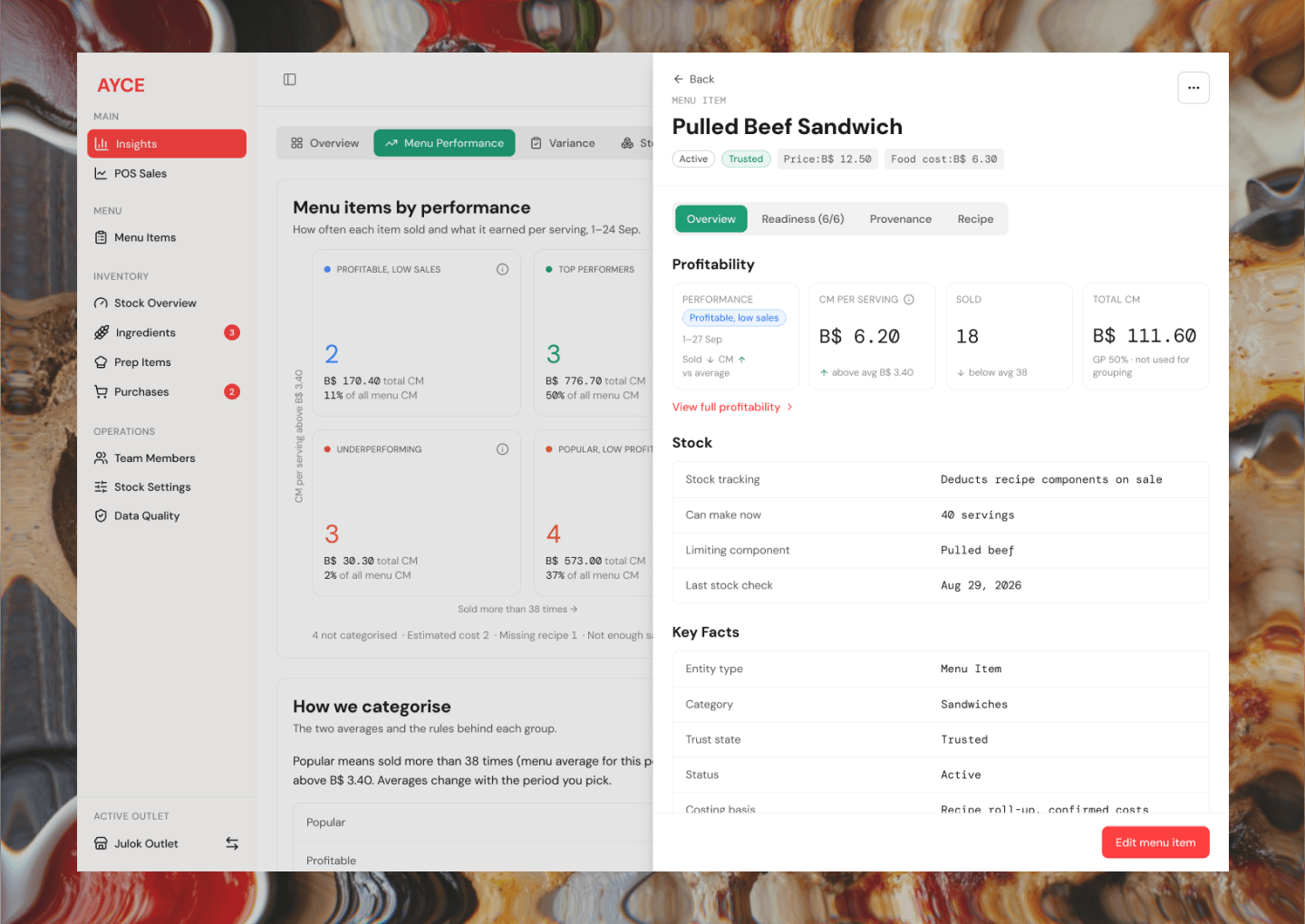
Symptom
Kitchen operations run on data most software never accounts for: menu items, ingredients, purchase options, prep items, batch stock, and purchase stock, all tangled together and constantly moving. Nothing about it was simple, and no off-the-shelf structure was going to fit.
Diagnosis & Build
I took full end-to-end product design ownership, from the first sketch to the final pixel. Before touching Figma, I started by mapping every data touchpoint in the kitchen: how ingredients become prep items, how prep becomes stock, how stock gets purchased and tracked. The system had to be built on how kitchens actually work, not how software assumes they work.
Field Research
Before designing anything, I spent time in a working kitchen during service, watching staff, counting interactions, and mapping where attention broke down. The brief said "make it cleaner." The real problem was too many decisions at the worst possible moments.
Read the full field notes →The Work
Result
AYCE is currently in active piloting with real kitchen teams, with full design ownership carried from a blank page through to launch.